
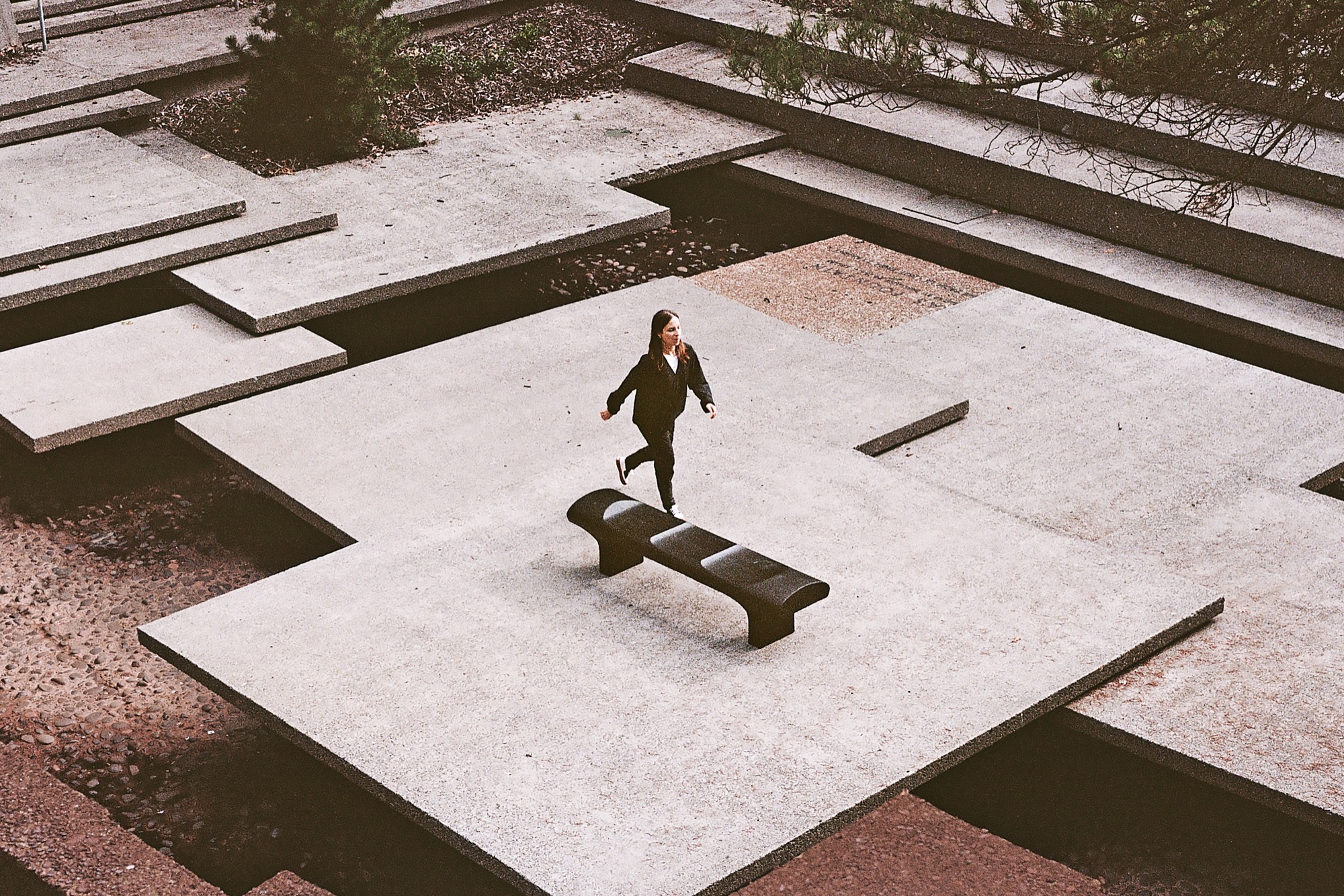
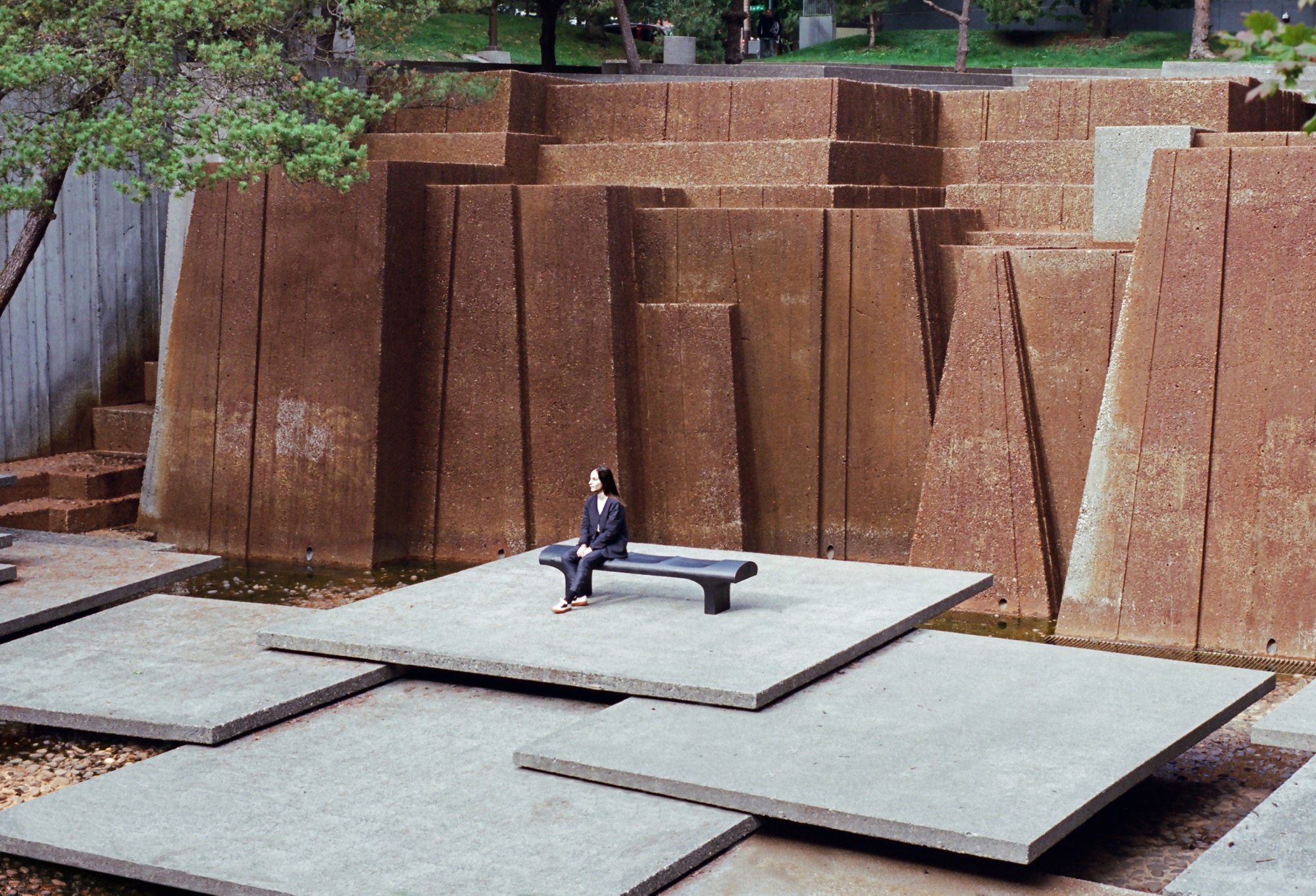
The bench was designed Ákos Huber by for the sunroom of our south-facing studio flat in the St. Francis apartments in NW Portland. This modular furniture was inspired by the idea of a growing family. Design and execution took almost three years with a few day long intense periods of work for my own joy. This “slowness” was so refreshing.
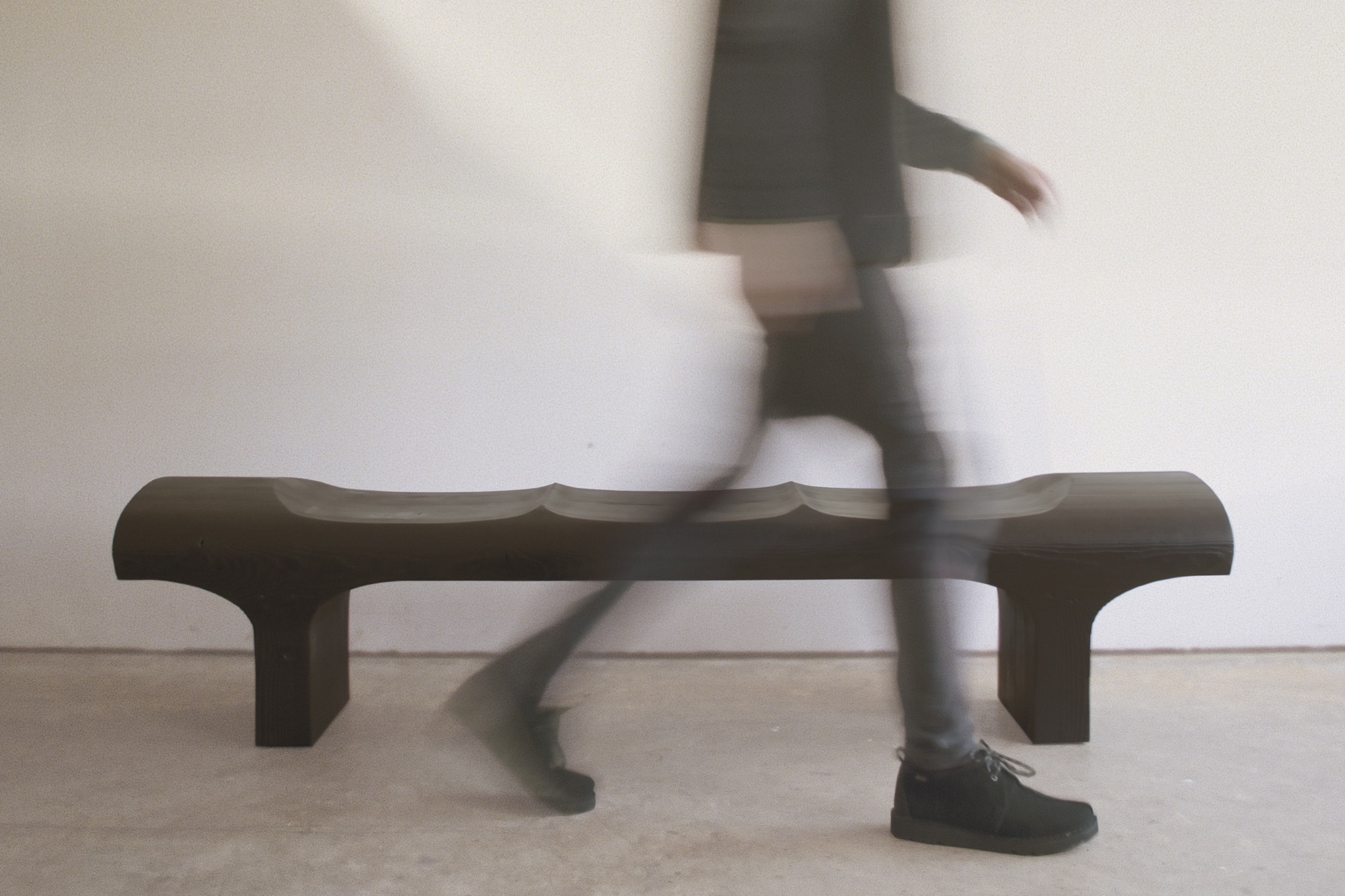
In the age of image generation, where you can make and share hundreds of images with the world in a matter of minutes and we are exposed to so many visual impressions daily, closeness to materials is essential. Providing space for serendipitous accidents can only happen if you grab a pencil or start playing with a handful of clay. During the process, this furniture was refined by numerous sketches, hand and computer drawings and models. They are also helpful – independently of the scale and function of the design – in figuring out details and the method of making. The idea of modularity for instance was tested on a 1:3 scale model where the seating and leg elements could be assembled in optional order, creating different lengths and compositions. The full scale object was executed with hand tools and simple machines by the designer, in the spirit of making a unique object with individuality.
Ákos Huber
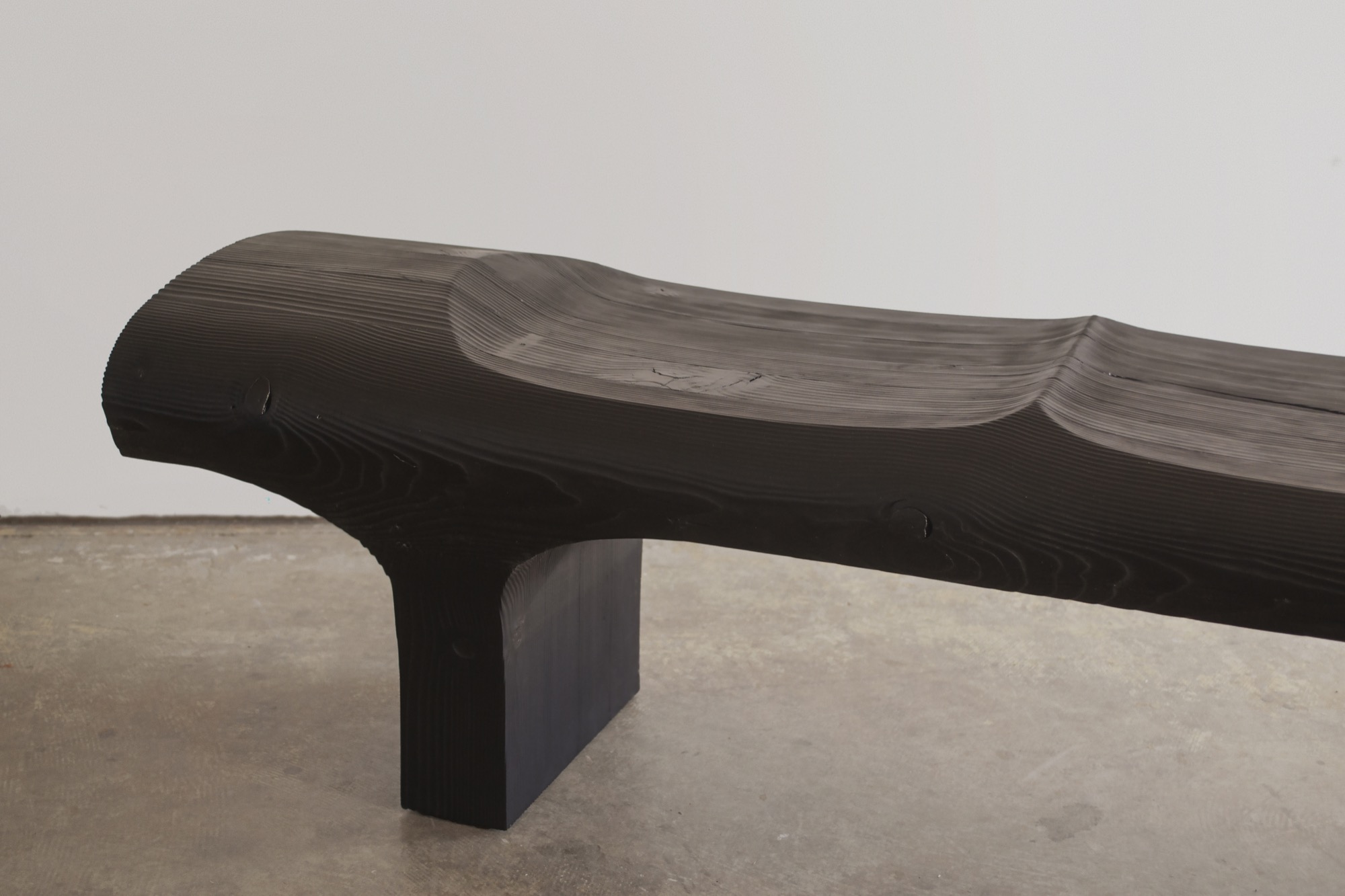
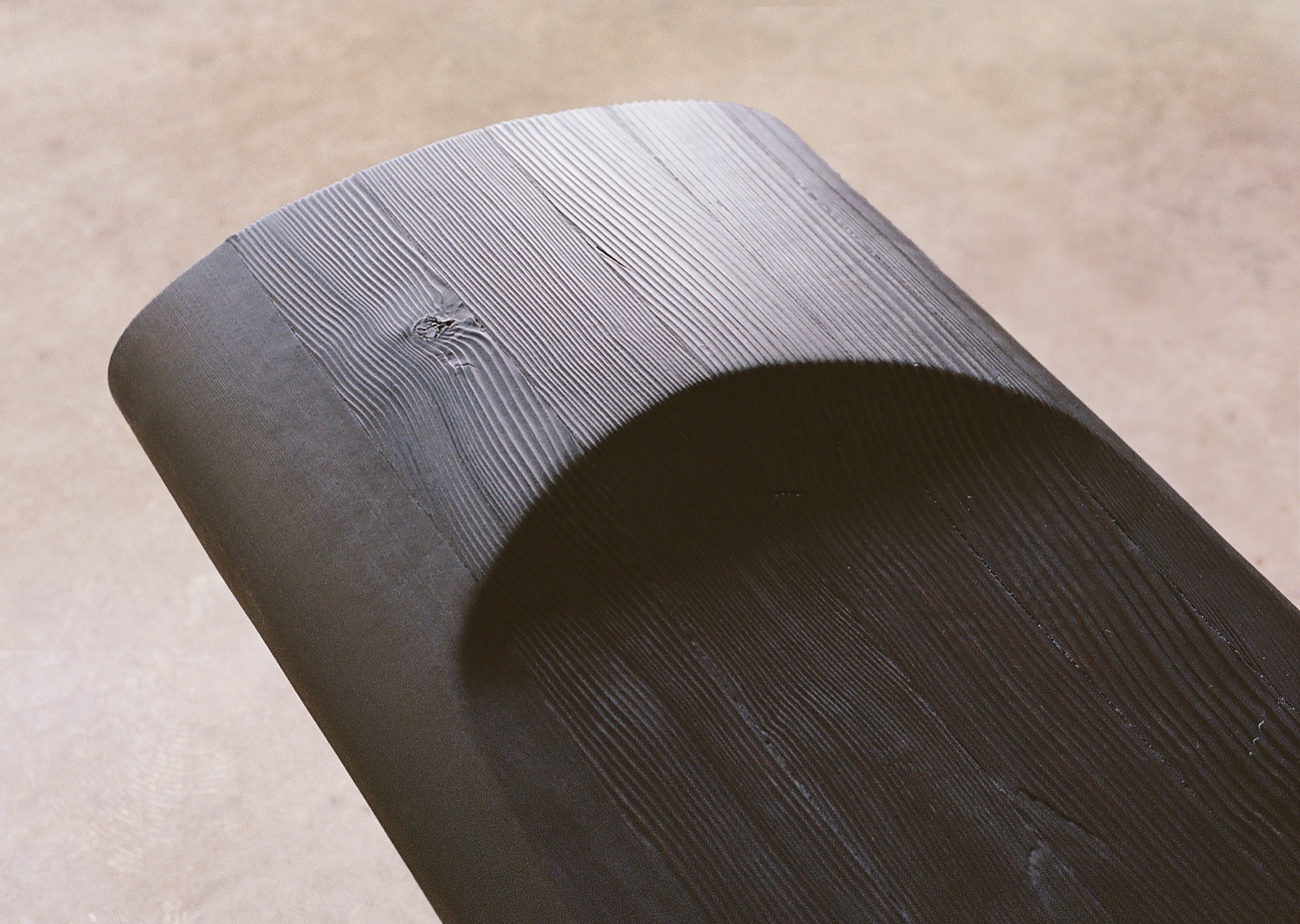
Reclaimed wood bears the signs of the passing of time, constructing with it requires patience and sensitivity. The material first started as Douglas fir trees growing up in the lush forests of the Pacific Northwest, then they were used as structural beams and eventually continued their life as a bench.
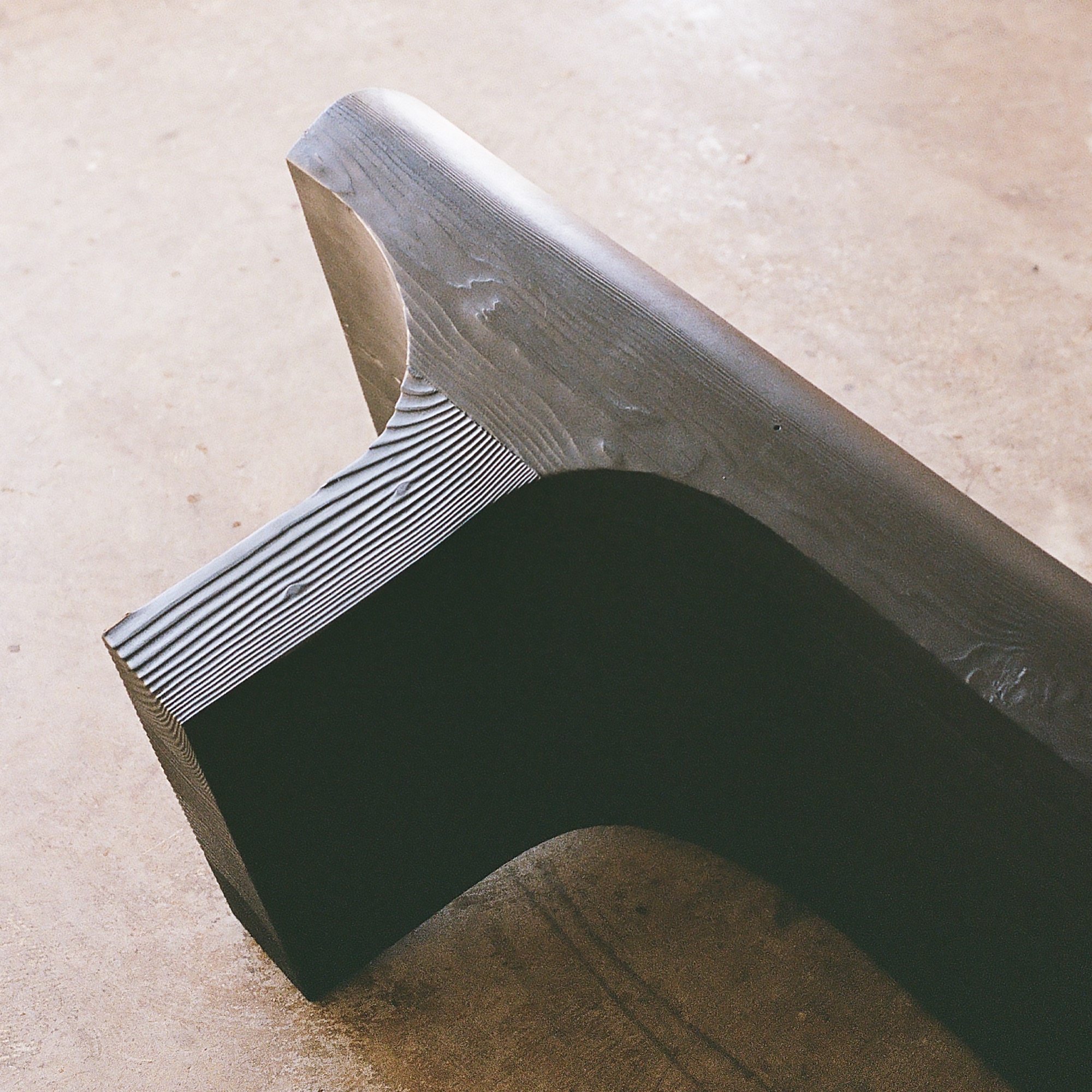
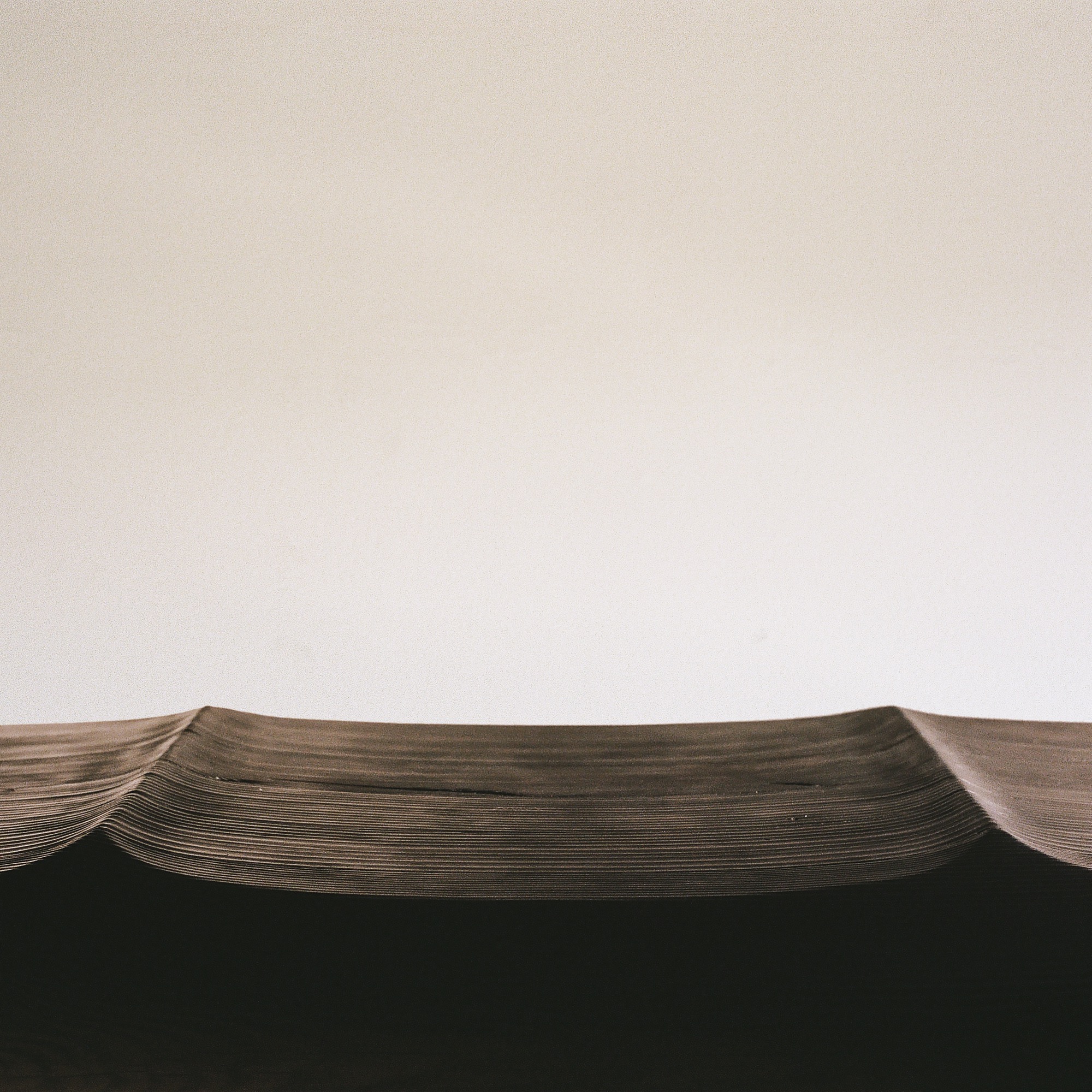
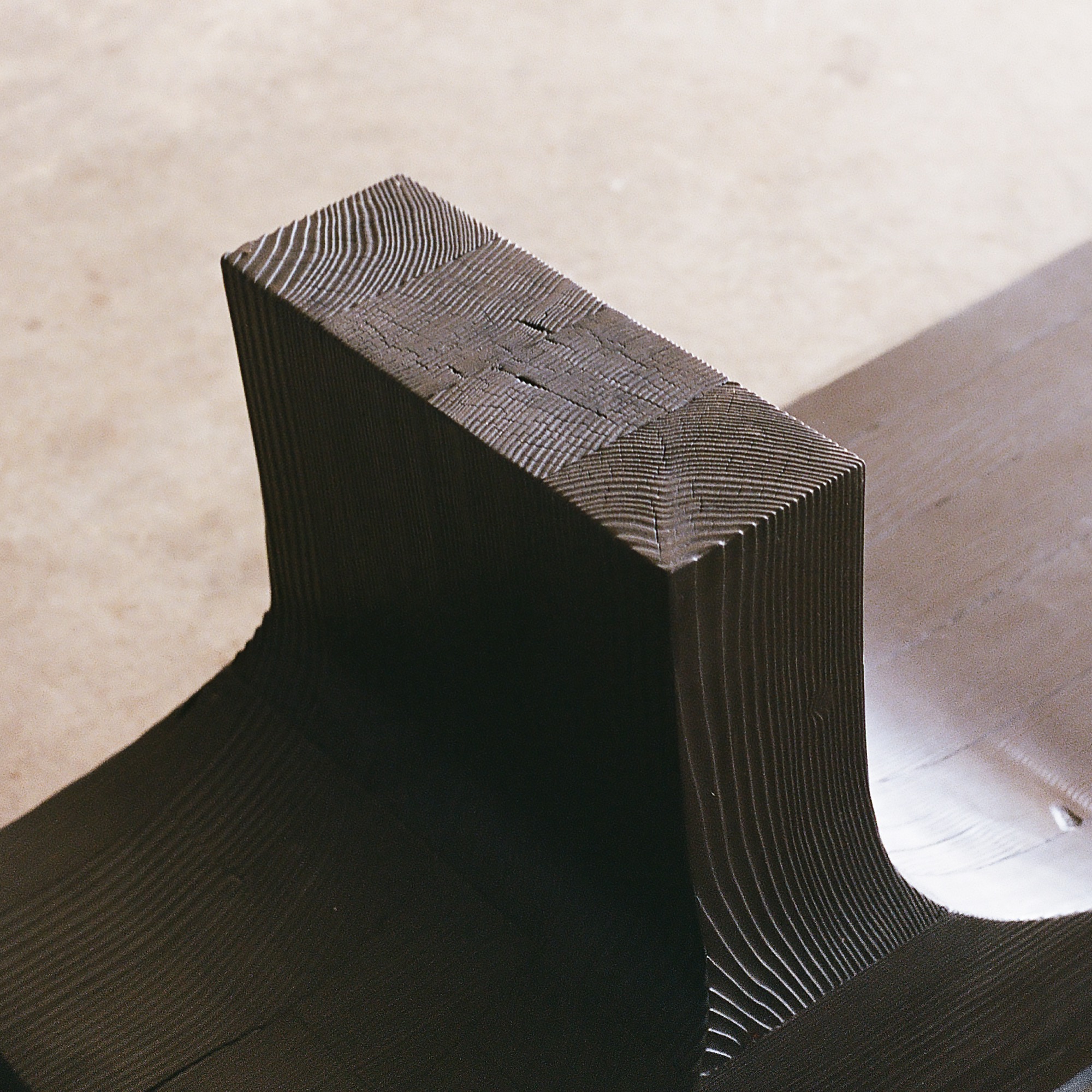
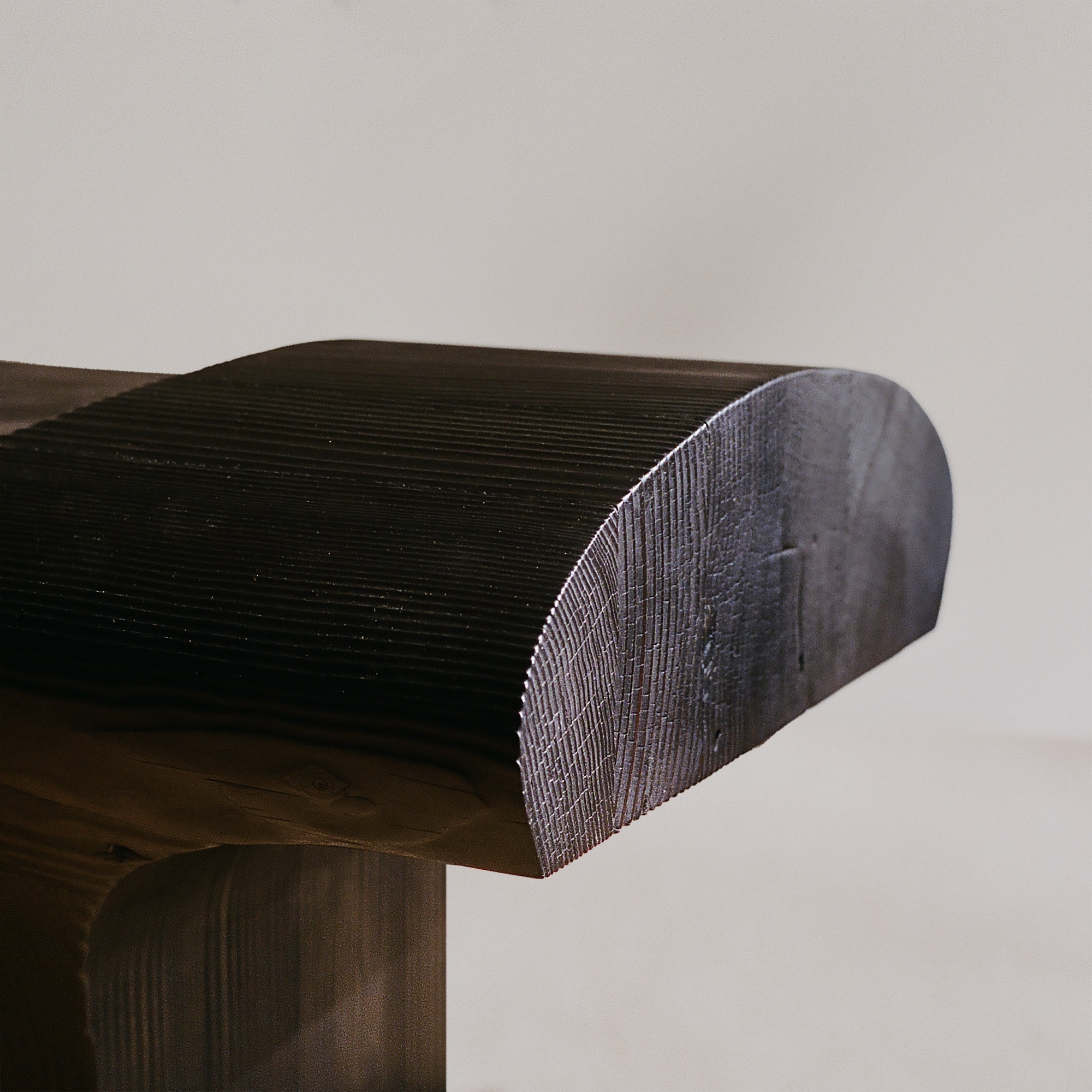
Ákos Huber found the right size and relatively straight material in the yard of a demolition company, where after a few hours of selection and rearrangement of the lumber stacks.
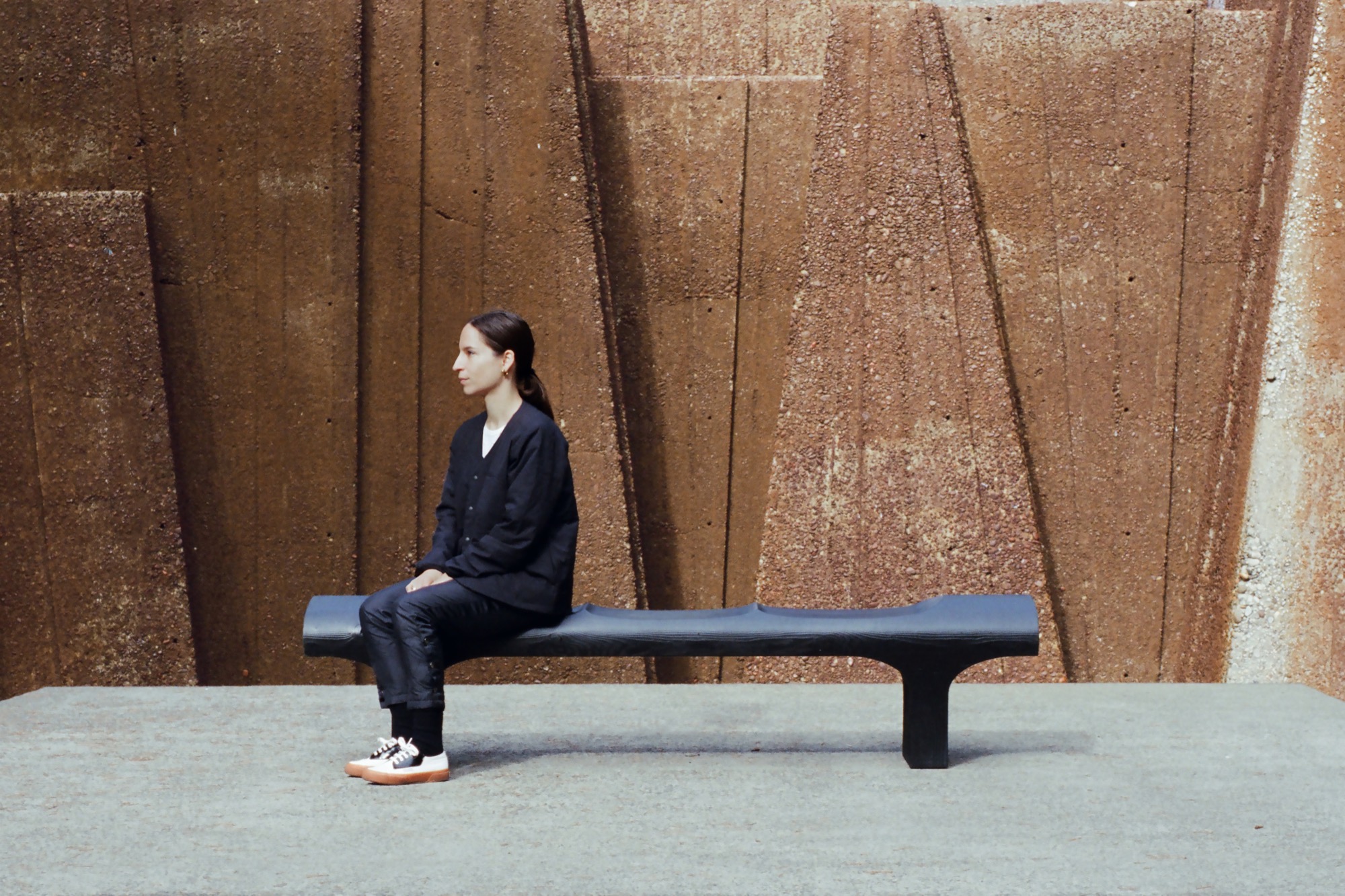
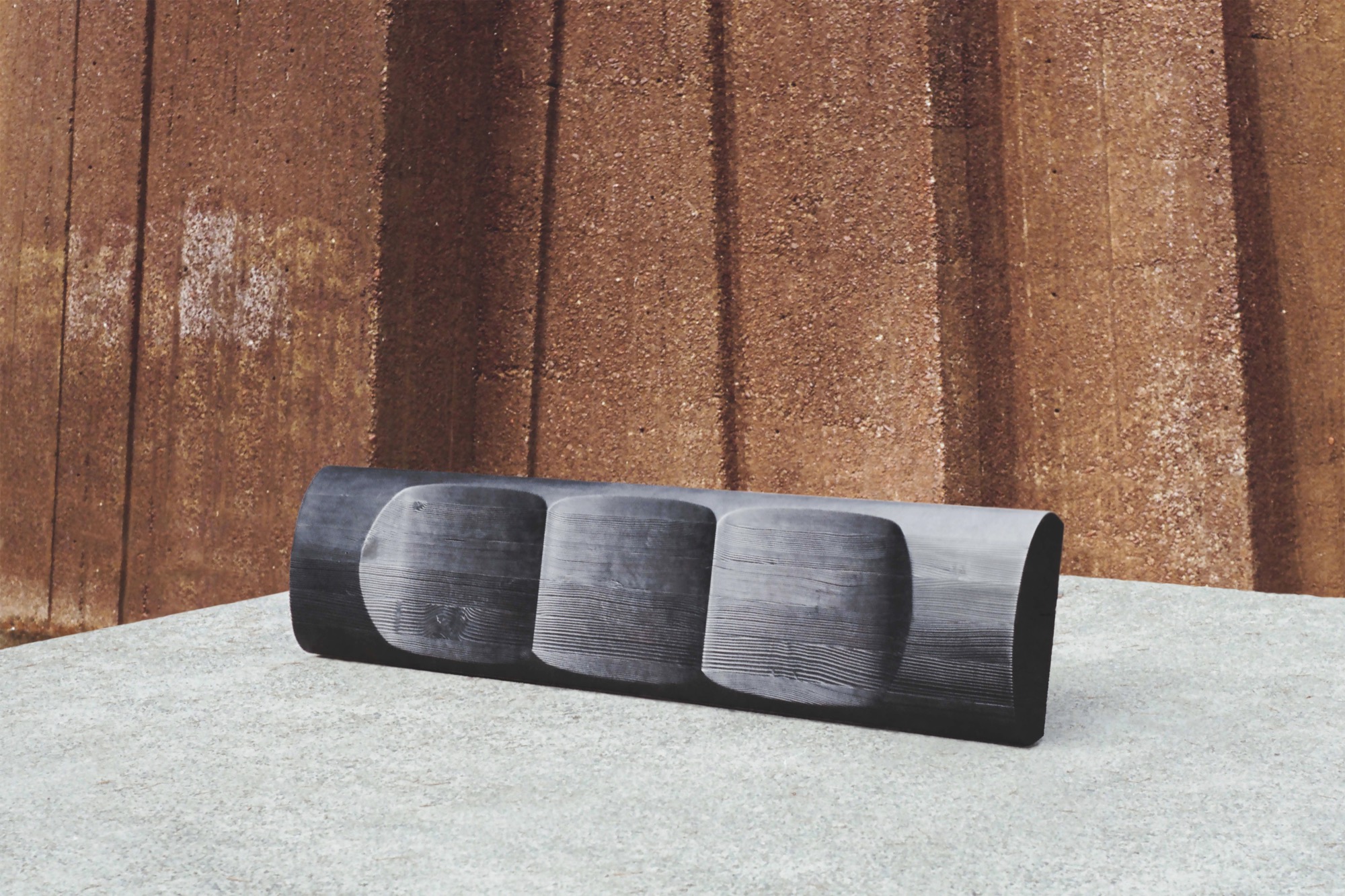
As it turned out later on, besides the four fir beams I picked, two blue pine pieces were selected unintentionally as well. The natural color and texture faded and the real tone became invisible due to the patina that had accumulated on the surface over decades. After arriving at the workshop, the first task was the surgical process of removing all nails, screws, and clips from the beams. This was followed by machining and shaping. Finally the uneven colors and grain patterns were unified by fire. Shou Sugi Ban, the traditional charring technique, was used to create a tactile texture and evenly black color on the surface. Even though the “wounds” are still visible on the body of the bench.
Ákos Huber
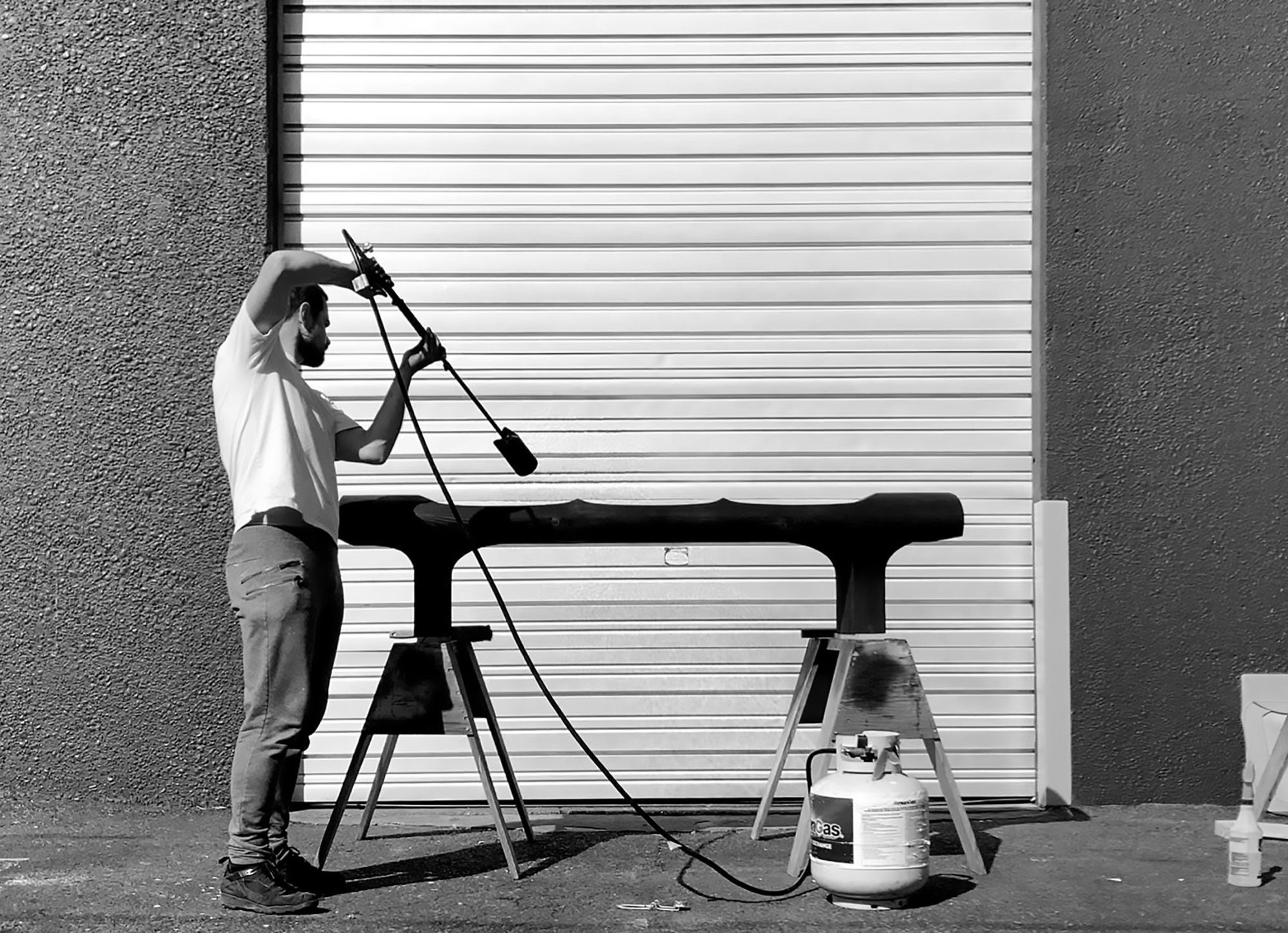
The designer explained: “native totem poles, carved out of huge tree logs hovering between earth and sky, Chillida’s “creatures” deeply embedded into the Basque landscape telling stories about balance, weight and space, the monumental rock-hewn churches of Lalibela in Ethiopia, Luis Barragan’s strong and surrealist colorful walls growing out of his region’s traditions and culture. These creations pluck the same string of the human soul and proclaim identity, naturalness and timelessness.”
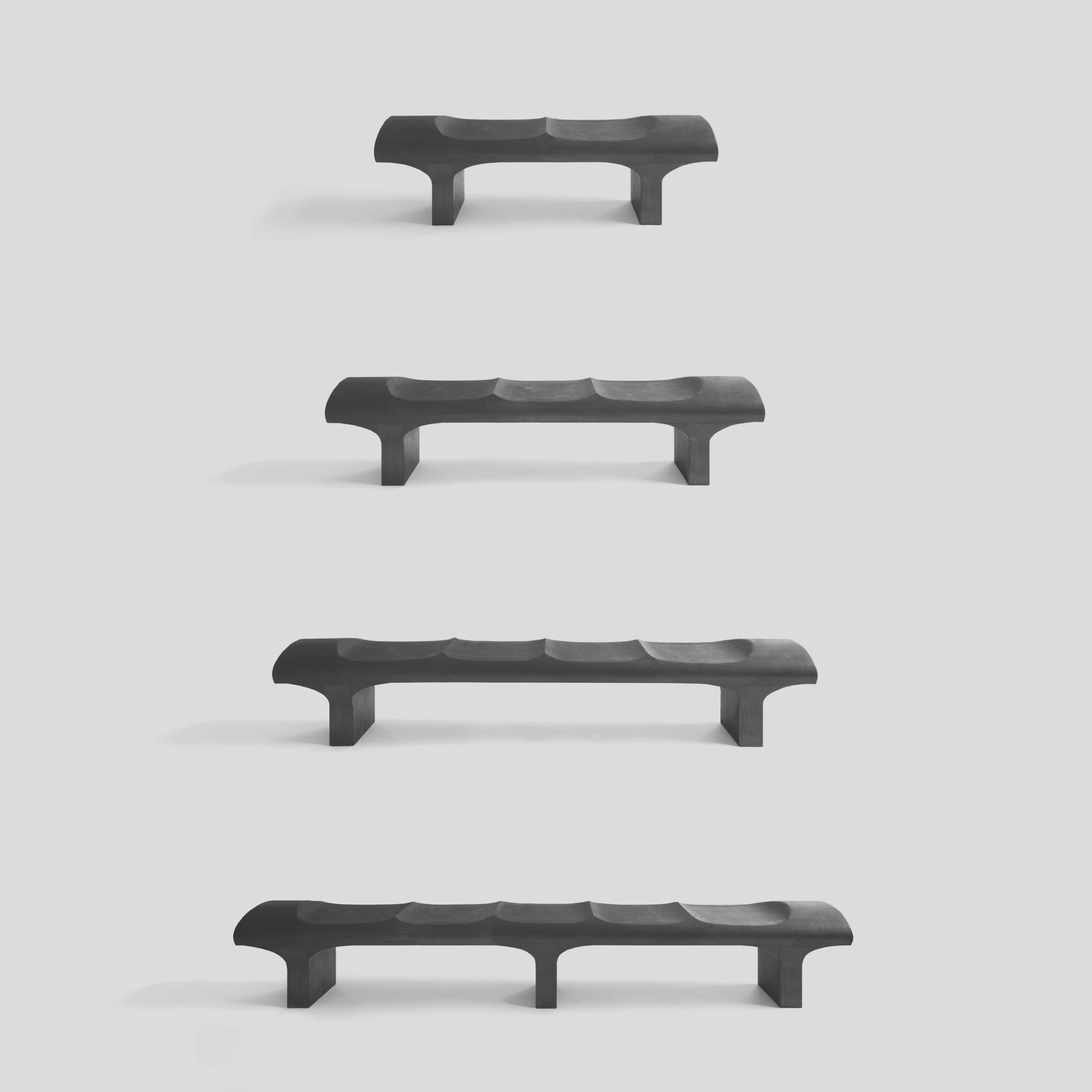
Sunroom Bench was made by subtracting from a singular mass, versus components and composite materials. In this process materiality has an extremely important role, it carries the presence of the object.
Ákos Huber is an architectural designer, furniture designer and craftsman. Originally from Hungary, his work has covered many fields ranging from furniture design to architecture, from drawings to sculpture. He completed his Master’s degree in architecture at the Moholy-Nagy University of Art and Design in Budapest.
Photos
Steven Patenaude, Ákos Huber