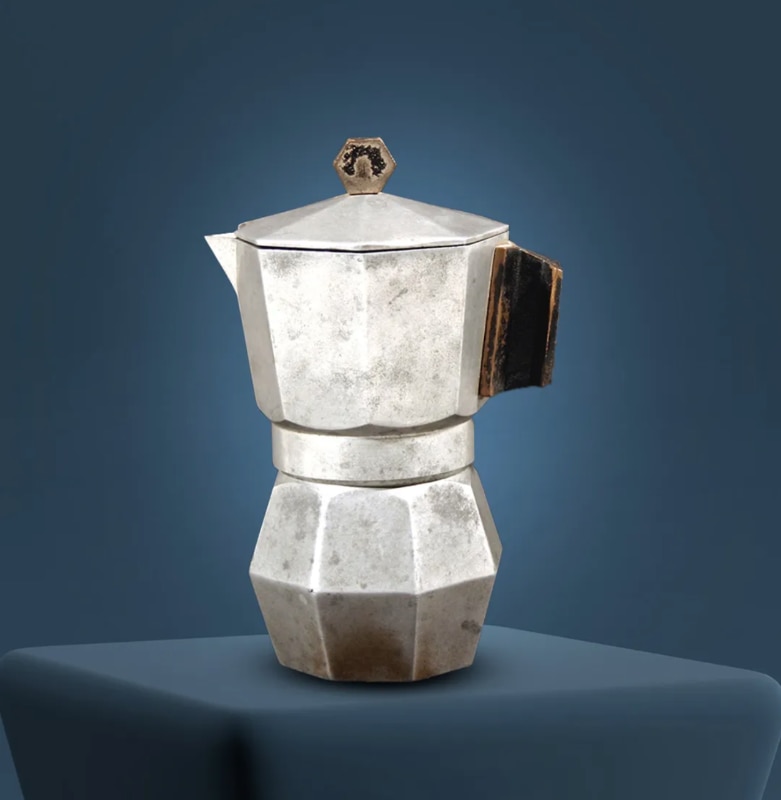
Moka Express

90 năm trước (1933), tại xưởng gia công của mình ở Crusinallo (Italy), Alfonso Bialetti đã phát minh ra một dụng cụ khiến ông và công ty của mình trở nên nổi tiếng khắp thế giới.

90 năm trước (1933), tại xưởng gia công của mình ở Crusinallo (Italy), Alfonso Bialetti đã phát minh ra một dụng cụ khiến ông và công ty của mình trở nên nổi tiếng khắp thế giới. Đó là Moka Express – chiếc bình pha cà phê đặt trên bếp, sử dụng áp suất để chiết xuất cà phê, cho phép bất kỳ ai cũng dễ dàng tạo ra một ly Espresso cổ điển ngon ngay tại nhà.

Bình Moka (tên quốc tế là Moka pot) được đặt theo tên của thành phố Mocha ở Yemen – một trong những vùng sản xuất cà phê đầu tiên trên thế giới. Ý tưởng hình thành thiết kế này được cho là đã đến với Bialetti khi ông quan sát vợ mình giặt quần áo bằng chiếc máy lisciveuse cổ điển, vốn là bộ dụng cụ gồm một nồi đun để làm nóng nước, nước sau khi sôi theo áp suất thoát qua một ống dẫn tới khu vực có chứa xà phòng, hỗn hợp nước xà phòng nóng sẽ được đổ lên quần áo để tiến hành giặt.

Cấu tạo một chiếc máy lisciveuse cổ điển

Nguồn
Bialettistory

Chính cơ chế vận hành của chiếc máy đó đã mang tới nguồn cảm hứng cho Alfonso Bialetti. Ông đã thiết kế một chiếc bình hình bát giác bằng nhôm, vốn là vật liệu và kiểu dáng được nhiều người yêu thích chủ nghĩ vị lai thời đó tôn sùng. Chiếc bình gồm hai phần, phần dưới đựng nước, phần trên cà phê sau khi chiết xuất. Đoạn nốt giữa hai phần chúng là bộ phận chứa bột cà phê. Khi đun nóng chiếc bình, áp suất từ nước sôi ở 100 độ C sinh ra sẽ đưa nước từ bình dưới theo ống dẫn đi lên lớp bột cà phê ở phần giữa, tại đây dưới tác động nhiệt, phản ứng hoá học xảy ra khi nước nóng thẩm thấu qua lớp bột. Cà phê sau đó được chiết xuất sẽ theo ống dẫn lên phần thân trên. Người thưởng thức chỉ việc rót dung dich đó ra cốc và thưởng thức. Espresso hình thành đơn giản như vậy.

Từ khi ra đời, chiếc bình Moka đã được sản xuất và tiêu thụ với số lượng rất lớn trên quy mô toàn cầu. Bên cạnh thiết kế sáng tạo, không thể không nhắc đến những chiến dịch quảng cáo do người con trai Renato của Alfonso thực hiện. Ông đã kết hợp với họa sĩ truyện tranh Paul Campani tạo ra một nhật vật lấy cảm hứng từ ngoại hình của chính Renato Bialetti, một người đàn ông lịch lãm và nhỏ bé với bộ ria mép. Nhân vật này sau đó đã chiếm được nhiều cảm tình từ công chúng khi lần đầu xuất hiện trong seri phim hoạt hình với câu khẩu hiểu sau này đã trở thành câu cửa miệng của nhiều người: “Ồ, vâng, vâng, thật dễ dàng để pha cà phê ngon!”. Rồi chính nhân vật hoạt hình này sau đó cũng thường xuyên xuất hiện trên chiếc bình Moka, trở thành một phần không thể thiếu của thiết kế.

Ông Renato Bialetti là con trai của Alfonso Bialetti, người giúp hơn 300 triệu chiếc bình Moka đã được bán ra trên toàn thế giới từ những năm 1950.

Cấu tạo một chiếc bình Moka hiện đại

Ninety years ago, in 1933, in his workshop in Crusinallo, Italy, Alfonso Bialetti invented an object that would make him and his company famous throughout the world: The Moka Express – the pressure stovetop coffee maker that allowed anyone to make a good old espresso at home.

The Moka pot is named after the city of Mocha in Yemen – one of the very first coffee production areas. Italian poet Giuseppe Parini recalls this in the verses of Il Mattino, when he celebrates the virtues of the “clear beverage” that comes from Aleppo “and distant Mocha too”. Instead, the idea for the design is said to have come to Bialetti while watching his wife do laundry with an old lisciveuse – a simple but effective ancestor of the washing machine that consisted of a pot in which water was boiled and then released through a pipe, mixed with lye and soap, onto the clothes to be washed.

This is where engineer Alfonso Bialetti drew inspiration to create his legendary coffee maker. In an octagonal aluminum pot – a material dear to the futurists at the time –, water heats up and rises until it meets the ground coffee deposited in the funnel-shaped filter, where it absorbs the aroma and color before settling in the other half of the pot.

Cấu tạo một chiếc máy lisciveuse cổ điển

Nguồn
Bialettistory

A simple but brilliant idea. So brilliant, in fact, that the Moka quickly became one of the most popular Italian design objects in the world, with hundreds of millions sold from the 1950s to present. But the Moka, with its unique Art Deco design, also gained popularity thanks to a highly innovative advertising strategy conceived by the founder’s son, Renato, and carried out by cartoonist Paul Campani. In 1953, inspired by Renato Bialetti’s appearance, Campani created the iconic “little man with a moustache”. This character, who immediately won the public’s affection, first appeared in a series of cartoons with the slogan “Oh, yes, yes… it seems easy… to make good coffee!”, which soon became a catchphrase. Later, it was also featured on the side of the Moka, becoming an organic part of the object. It was one of the first examples of an entrepreneur directly participating in the promotion of one of his products, even if in an ironic and somewhat cartoonish way.

In 1958, he landed on Carosello, an Italian television advertising show. The little man with a mustache was voiced by Raffaele Pisu, and his mouth took the shape of the letters of the words he pronounced. Thus the phlegmatic man with a fedora-like hat became one of the hallmarks of the golden age of Italian advertising, along with Cavandoli’s La Linea for Lagostina and the Pagot brothers’ Calimero for Mira Lanza. They’re all proof that creativity can reach out to everyone and promote something that improves people’s lives.

Moka, with its unique Art Deco design, also gained popularity thanks to a highly innovative advertising strategy conceived by the founder’s son, Renato, and carried out by cartoonist Paul Campani. In 1953, inspired by Renato Bialetti’s appearance, Campani created the iconic “little man with a moustache”.